Quantum Milestone: How Three Scientists (John Clarke, Michel Devoret, and John Martinis) Changed Physics Forever – 2025 Nobel Prize Revealed
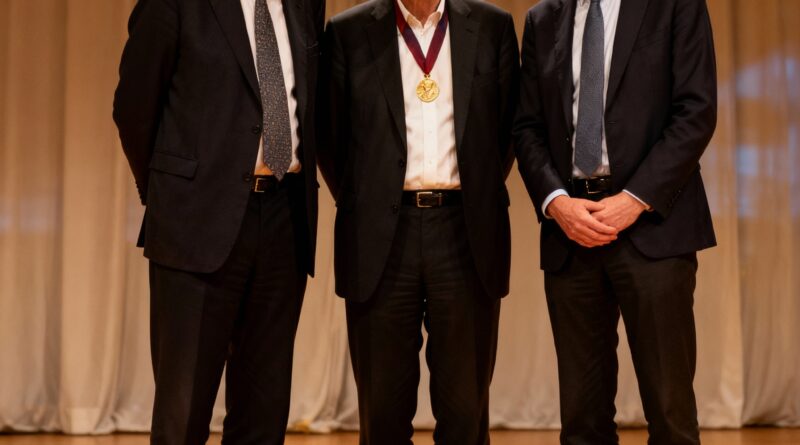
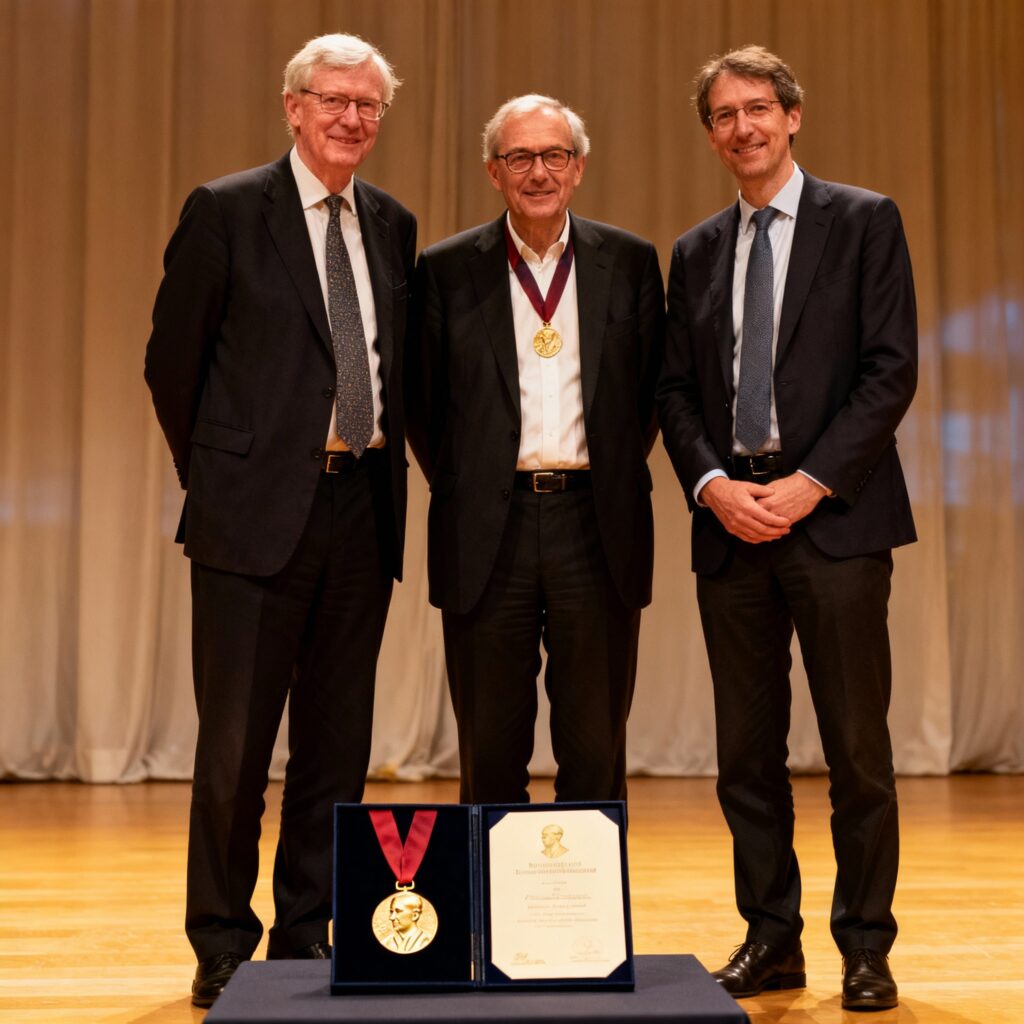
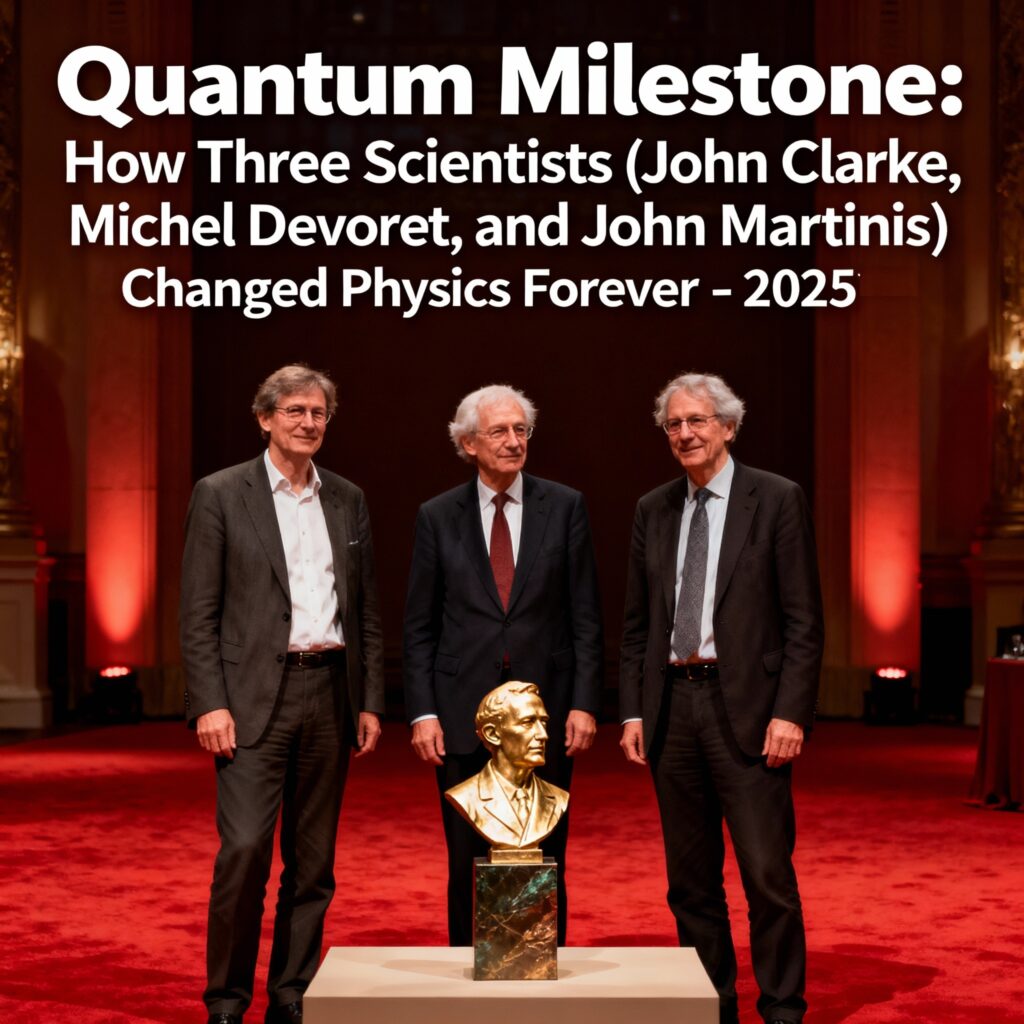
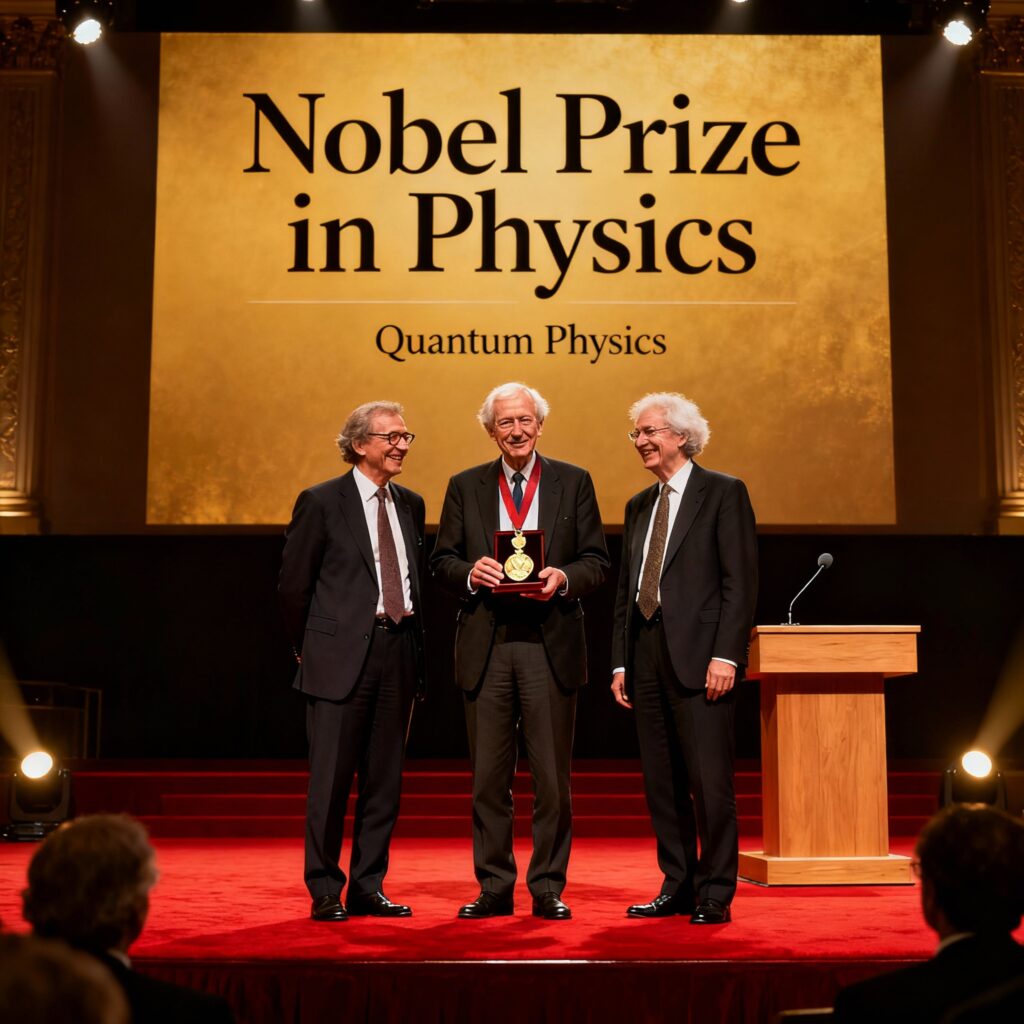
The 2025 Nobel Prize in Physics has just made headlines around the world, marking a quantum milestone. This year, the Royal Swedish Academy of Sciences honored three remarkable scientists—John Clarke, Michel Devoret, and John Martinis—for their discoveries that have shined a new light on the mysteries of quantum physics. Their work isn’t just pushing the boundaries of science; it’s paving the way for future technologies that could change how we live and communicate.
Quantum Milestone: How Three Scientists (John Clarke, Michel Devoret, and John Martinis) Changed Physics Forever – 2025 Nobel Prize Revealed
Meet the Laureates:
Let’s get to know these trailblazers a bit better:
- John Clarke, originally from Britain and now teaching at the University of California, Berkeley, has left a big mark on quantum electronics through decades of research.
- Michel Devoret brings a French perspective and teaches at both Yale University and UC Santa Barbara; he’s a specialist in quantum information and circuits that push the limits of what’s possible.
- John Martinis, based at UC Santa Barbara, leads innovations in quantum computing and has worked closely with Google’s Quantum AI team.
Quantum Milestone: The Breakthrough That Won the 2025 Nobel Prize:
Back in the 1980s, Clarke, Devoret, and Martinis teamed up for a series of experiments that changed the game. Using superconducting circuits called Josephson junctions (think super-thin layers separating sections that conduct electricity with almost no resistance), they unveiled two major quantum effects:
- They showed that even large groups of electrons could “tunnel” through barriers, acting as if they were a single quantum object—a feat once thought possible only on the tiniest atomic scale.
- Their circuits didn’t just behave like regular electronics. Instead, they absorbed and released energy in specific packets called “quanta,” proving that quantum mechanics can show up in everyday devices.
This leap didn’t just confirm theories—it connected the abstract world of quantum physics to the gadgets we use daily.
Impact of the Quantum Milestone on Modern Technology:
Why does this matter to all of us? Their discoveries set the stage for practical quantum technologies—like quantum computers, ultra-sensitive sensors, next-level encryption, and even improvements to the chips inside our smartphones. John Clarke himself remarked that many modern devices, including cell phones, owe a debt to these kinds of quantum breakthroughs.
Olle Eriksson, who chairs the Nobel Committee, summed it up: “Quantum mechanics might be centuries old, but it’s still full of surprises—which is great news for technology and innovation.”

Reactions and What’s Next:
Scientists Behind the Quantum Milestone: Clarke, Devoret, and Martinis
The scientific community is buzzing. Richard Fitzgerald, editor of Physics Today, called this award a turning point for connecting deep theory to the rapid progress in quantum computing we’re seeing right now.
Michael Moloney, CEO of the American Institute of Physics, highlighted how this work is especially notable during 2025’s International Year of Quantum Science and Technology.
Why the Quantum Milestone Matters for Future Innovations:
Clarke, Devoret, and Martinis aren’t just making headlines—they’re inspiring students, engineers, and new researchers to dream bigger and dive deeper into the quantum universe. Their legacy is sure to fuel innovation for years to come.
Conclusion:
The Nobel Prize in Physics for 2025 celebrates more than just scientific brilliance-it recognizes new opportunities for humanity. Thanks to Clarke, Devoret, and Martinis, the quantum world is no longer just a topic for textbooks. Their work reminds us that curiosity, teamwork, and perseverance can create discoveries that shape the technology